What is Vitrification?
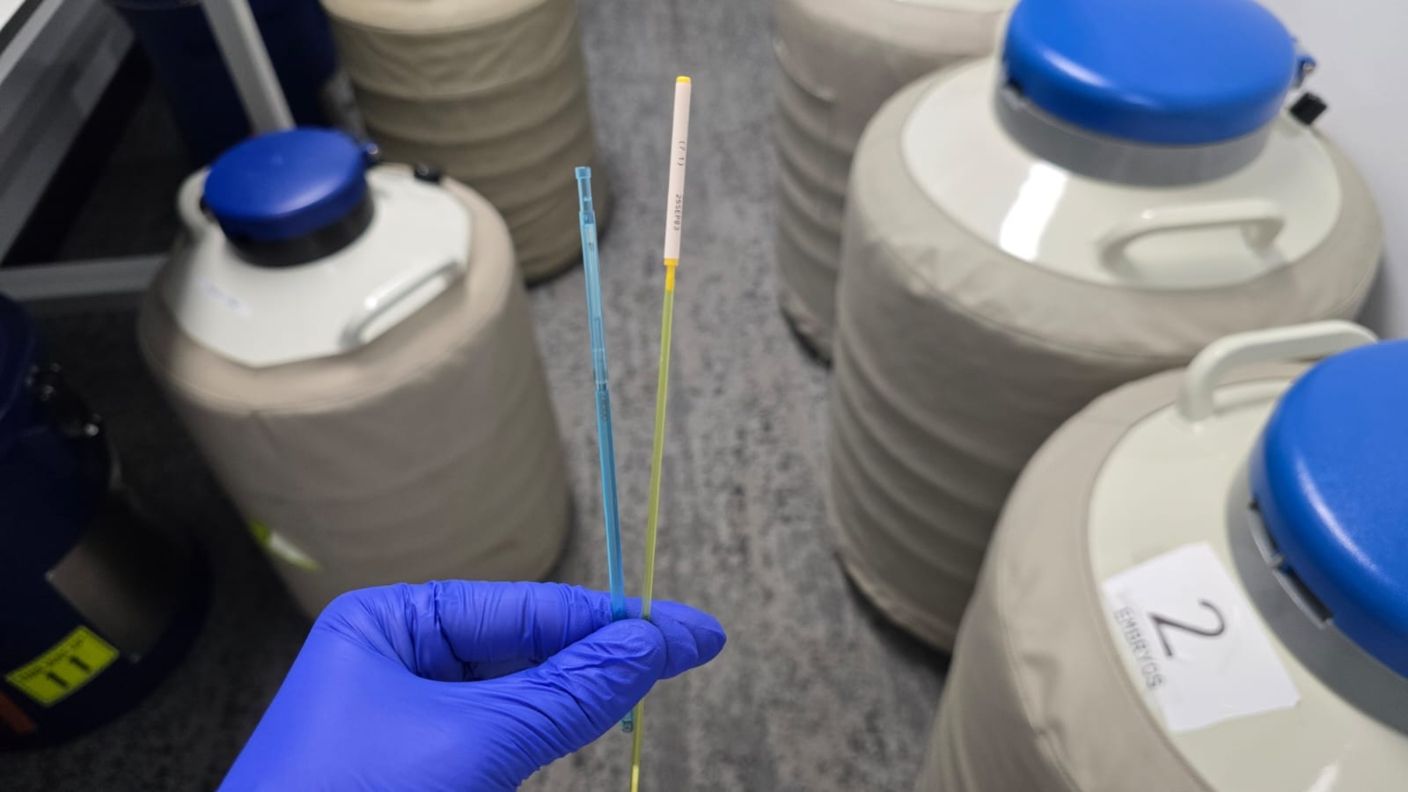
Vitrification is an advanced embryo cryopreservation technique that rapidly cools embryos in a highly concentrated cryoprotectant solution, preventing ice crystal formation. Unlike traditional slow freezing, vitrification results in a glass-like solid state, ensuring better embryo survival upon thawing. The key downside is that a skilled embryologist needs to carefully thaw the embryos for transfer whereas ET technicians can thaw and transfer DT embryos themselves.
Advantages of Vitrified Embryos
- Higher post-thaw survival rates: The ultra-rapid freezing prevents ice damage, improving embryo viability.
- Improved storage potential: Vitrified embryos can be stored indefinitely without significant quality loss.
- Better results with in vitro-produced (IVP) embryos: Vitrification is more compatible with IVP embryos compared to conventional freezing methods.
Challenges of Vitrification
- More complex thawing process: Requires precise warming protocols and rehydration steps.
- Specialised training and equipment needed: Not all breeding operations have access to vitrification expertise.
- Not always suitable for field use: Due to the technical nature of the thawing process, on-farm use can be challenging without proper facilities.
What is Direct Transfer (DT)?
Direct Transfer (DT) embryos are conventionally frozen embryos that can be thawed and transferred directly into recipients without additional processing or technical thawing protocols. This method is widely used in commercial ET programs due to its simplicity and cost-effectiveness.
Advantages of DT Embryos
- Simpler transfer process: Requires minimal handling and can be easily done in field conditions.
- Flexibility in transfer: Embryos can be thawed and transferred into synchronised recipients as needed.
- Lower equipment and training requirements: More accessible for breeders without advanced cryopreservation expertise.
- Reduced time between thawing and transfer: DT embryos can be directly deposited into synchronised recipients, minimising stress and logistical challenges.
- More economical: Lower overall costs compared to vitrification due to simpler protocols.
Challenges of DT Embryos
- Lower post-thaw survival rates: Compared to vitrified embryos, DT embryos are more susceptible to ice damage.
- Shorter storage lifespan: Though still viable for long-term storage, they may not maintain the same level of quality as vitrified embryos over extended periods.
- Less effective for IVP embryos: In vitro-produced embryos often have lower survival rates with conventional freezing methods compared to vitrification.
Which Method is Best?
The choice between vitrified and DT embryos depends on several factors, including what process the IVF service provider offers, the availability and expertise of the transfer technician (and embryologist if vitrified), distance from the lab and breeding objectives.
- Vitrification is ideal for breeders working with IVP embryos, requiring higher post-thaw survival rates, and having access to advanced cryopreservation equipment.
- DT embryos are better suited for field conditions, large-scale commercial ET programs, and breeders looking for a more straightforward, cost-effective solution.
Nbryo currently offers both vitrification and DT solutions to best meet the needs of our partners and clients.
What is the freezing solution for the future?
Both methods have their place in modern cattle breeding, and selecting the right technique depends on operational needs and available resources. As embryo technology continues to advance, improvements in both vitrification and DT processes will further enhance breeding efficiency and genetic progress in the cattle industry.