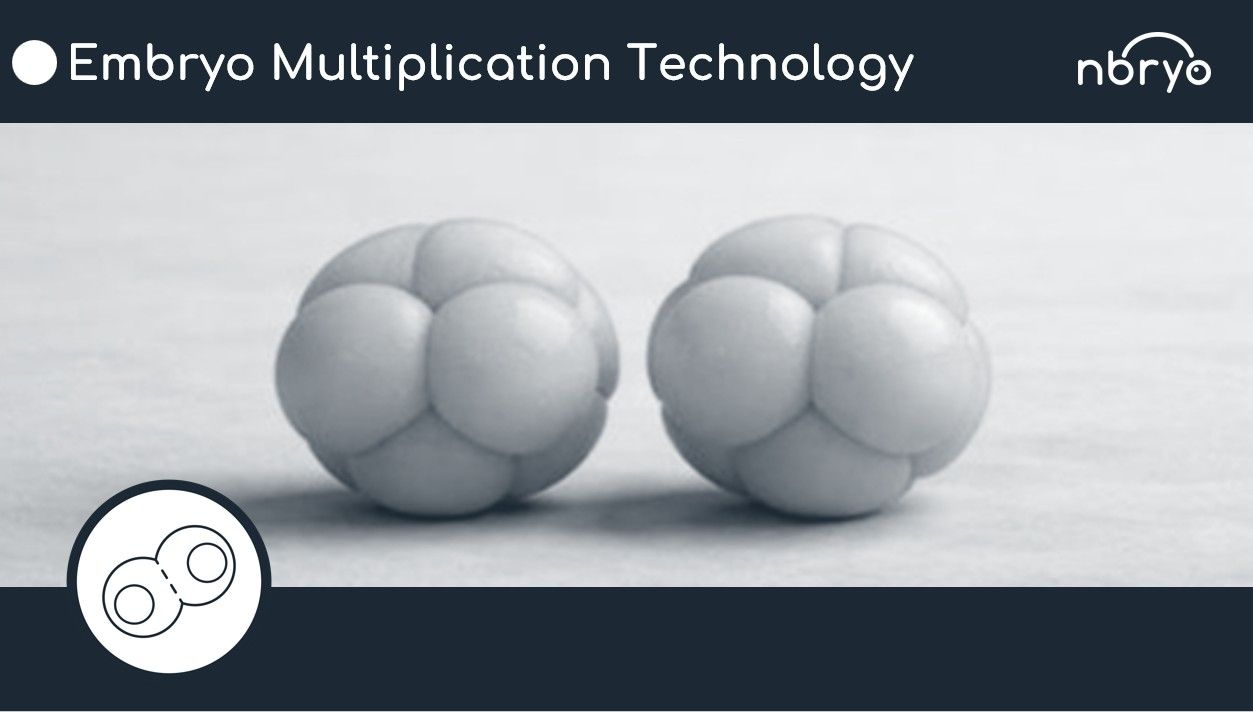
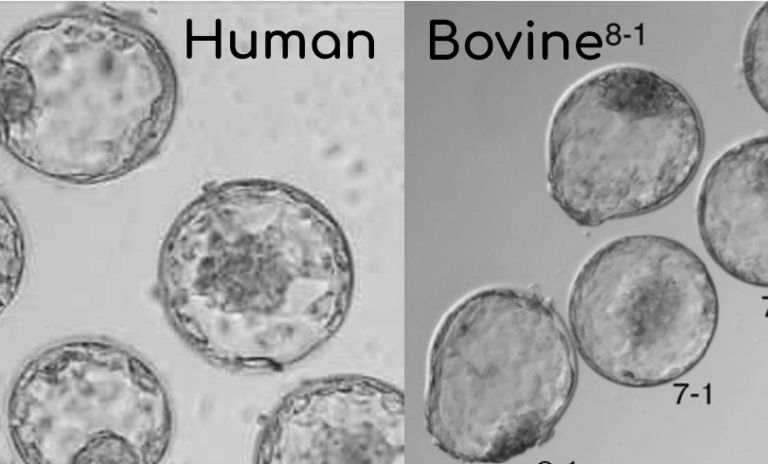
Mimicking nature—safely in the laboratory
Multiplication Technology is inspired by the natural process of twinning observed in species such as sheep. Rather than occurring randomly in the paddock, Nbryo replicates this biological principle in a controlled laboratory environment, allowing multiple embryos with the same genetics to be generated from a single fertilisation event.
Nbryo’s Multiplication Technology is a patented process that does not involve cloning, gene editing, or genetic modification. All embryos are produced through normal fertilisation using selected sires and dams—supporting genetic integrity, regulatory acceptance, and industry confidence.
Multiplying genetic impact: a practical example
Traditionally, a valuable donor cow undergoing IVF may produce approximately five embryos per cycle, resulting in two to three pregnancies. With Multiplication Technology, that same donor may yield around 12 to 15 embryos—resulting in five to eight pregnancies in a single collection cycle.
Multiplication also increases the productivity of high‑value semen. In a typical IVP program, one straw of semen can be used across ~10 donors to produce around 40 to 50 embryos. With Multiplication Technology, that same straw can potentially generate more than 100 embryos—either enabling greater investment in superior sires or helping reduce the cost per embryo.
Impact on pregnancy rates: Early results are promising, showing only a small difference in pregnancy rates between multiplied embryos and conventional embryos when using vitrified embryos.
Benefits
- 2-3x as many calves from genetically superior females
- Faster, more effective herd genetic upgrade within a single season
- Greater ability to scale elite genetics into commercial herds
- Only 15 donors needed for on-farm OPU (20-25 for conventional OPU)
- 1 straw of semen can produce twice as many calves (1 straw -> 80-100 calves)
- Lower cost per embryo and calf born
Figure 1 | Multiplication Technology – Practical Example
Figure 1. The practical impact of embryo multiplication—increasing embryos and pregnancies from a single elite donor.
Scaling production through laboratory automation
To support commercial adoption, Nbryo is advancing laboratory automation as part of its Multiplication platform. Nbryo is currently working on automating the multiplication process itself to drive further efficiencies, enabling embryo production to be scaled consistently and reliably and helping bridge the gap between what is biologically possible in the lab and what is practically achievable for producers.
By increasing throughput while maintaining quality, Multiplication Technology supports the creation of embryos that are viable, transferable, and suited to real‑world commercial cattle systems globally.
Figure 2 | Multiplication Technology – Laboratory Automation
Figure 2. Laboratory automation enabling large‑scale production of commercially viable embryos.
Cost effective embryo transfer
Producing more high‑quality embryos requires these embryos to be transferred readily and cost‑effectively. Recognising this, Nbryo is developing an embryo transfer device designed specifically for use by semi‑skilled operators such as AI technicians. This:
- Reduces reliance on specialist veterinarians
- Lowers labour and training barriers to embryo transfer
- Supports deployment through existing AI service models as embryo availability increases
Making IVF accessible and affordable
Nbryo’s goal is to make IVF‑derived genetics accessible and affordable for commercial beef and dairy producers—not confined to elite seedstock producers. By pairing embryo multiplication with simplified transfer technology, Nbryo is laying the groundwork for IVF to follow a similar adoption path to fixed‑time AI: becoming a mainstream tool rather than a niche solution.
Advancing the future of cattle breeding
By mimicking natural biology and focusing on simple, scalable delivery, Nbryo’s Multiplication Technology represents a fundamental shift in how genetic progress can be achieved—faster, wider, and with greater practical impact for the cattle industry.